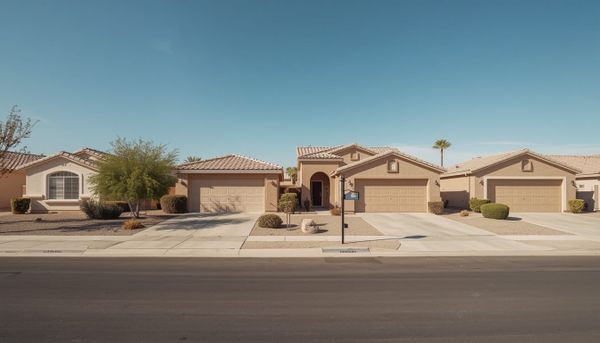
You Need 98,000 to Retire Comfortably. East Valley Home Equity Changes That Calculation

TEAM CASSELS | EAST VALLEY MORTGAGE
| RETIREMENT INTELLIGENCE | June 2026 | 5 min read |
Americans told Northwestern Mutual's 2026 Planning and Progress Study they believe they need .5 million to retire comfortably. A new Investopedia analysis of federal data from the U.S. Census Bureau, Bureau of Labor Statistics, Social Security Administration, and Bureau of Economic Analysis puts the real number considerably lower: 98,000 for a single retiree. That is still a significant sum. But for East Valley homeowners who bought a home in Mesa, Gilbert, Chandler, or Queen Creek more than five years ago, a meaningful portion of that nest egg may already be sitting in their home, accessible through a financial tool most retirement planners never bring up.
How Investopedia Got to 98,000
|
The math behind the 98,000 figure is straightforward and worth understanding. The average American age 65 or older living alone spent approximately 9,600 in 2024, according to the BLS Consumer Expenditure Survey. That spending covers housing, food, healthcare, transportation, and the discretionary items that make retirement comfortable rather than merely survivable: ,000 on entertainment, ,800 on dining out, and hundreds more on travel. Social Security offsets part of that. The average retired-worker benefit was ,975 per month in December 2024, which translates to roughly 3,700 per year. That leaves an income gap of approximately 5,900 annually that must come from personal savings. Apply the standard 4% annual withdrawal rate, the longstanding financial planning rule of thumb for sustainable retirement withdrawals, and the nest egg required to cover that gap is 98,000. Not .5 million. 98,000. |

An East Valley homeowner in the early stages of retirement planning who has built significant equity has options most financial plans never account for. |
| THE RETIREMENT MATH, HOW INVESTOPEDIA CALCULATED 98,000 (2024 FEDERAL DATA) | |||
|
Annual Spending 9,600 BLS average for single Americans 65+ including housing, food, healthcare, entertainment, and travel |
Social Security Covers 3,700 Average retired-worker benefit of ,975/month as of December 2024 (SSA data) |
Annual Gap From Savings 5,900 The income gap that personal savings or home equity must cover each year of retirement |
Nest Egg Required (4% Rule) 98,000 5,900 divided by 4% withdrawal rate. Far below the .5M Americans believe they need |
| Source: Investopedia analysis of U.S. Census, BLS Consumer Expenditure Survey, Bureau of Economic Analysis, and SSA data. HousingWire, June 2026. | |||
Why Arizona Makes the Number Smaller, and Coastal Retirees Are Taking Note
The 98,000 figure is a national average. The actual number for an East Valley retiree is lower, because housing, the single largest variable in retirement spending, is considerably less expensive in Arizona than in the states where the highest required nest eggs are concentrated. The most expensive states for retirement require nest eggs above million: New Jersey at .02 million, Hawaii at .02 million, California at .01 million, and Washington DC at .01 million. The primary driver in each case is housing, which costs more than 9,000 per year in California compared to significantly less in Arizona.
Arizona's total annual tax burden for retirees runs approximately ,800, with low income tax rates and modest property taxes. The state averages 299 sunny days per year, carries lower healthcare costs than coastal markets, and has established retirement infrastructure, particularly in the East Valley communities of Mesa, Gilbert, Chandler, and Queen Creek, that attracts retirees from California, the Pacific Northwest, and the Midwest. A California retiree who sells a .5 million Los Angeles home, purchases an East Valley home for 50,000, and banks the remaining 50,000 has changed their retirement math entirely. They have converted a million nest egg requirement into a funded retirement while simultaneously lowering their ongoing housing costs.
| State / Location | Required Nest Egg | Key Driver |
| New Jersey | ,020,000 | High housing costs, property taxes among highest in US |
| California | ,010,000 | Housing 9,000+/year; income and capital gains taxes; high cost of living overall |
| National Average | 98,000 | Average across all states; skewed upward by high-cost coastal markets |
| Arizona (East Valley) | Below national avg. | Low tax burden (,800/yr), lower housing costs than coastal states, 299 sunny days |
| North Dakota (lowest) | 44,000 | Lowest housing costs in the analysis; limited retirement infrastructure |
The Tool Most Financial Plans Skip: Your Home Equity
The Investopedia analysis calculates the nest egg from savings. It does not account for what sits inside the walls of the retiree's home. For an East Valley homeowner who purchased before 2021, that number may be significant. A home purchased in Mesa for 80,000 in 2016 may now carry a market value of 00,000 or more. That 20,000-plus in appreciation is not liquid, until it is converted. A Home Equity Conversion Mortgage, commonly called a Reverse Mortgage, is the federally-insured instrument that converts home equity into retirement income without requiring a monthly mortgage payment and without requiring the homeowner to sell or move.
The HECM is available to homeowners age 62 and older. The borrower receives proceeds as a line of credit, fixed monthly payments, a lump sum, or a combination. No monthly mortgage payment is required. The loan balance grows over time and is repaid when the borrower sells the home, moves permanently, or passes away. For a single East Valley retiree with 00,000 in savings and 00,000 in home equity, the HECM does not replace the savings plan. It supplements it, stretching the nest egg further, reducing the risk of outliving savings, and providing a financial cushion for the unexpected healthcare or maintenance costs that most retirement plans underestimate.
| HOW A HECM CHANGES THE RETIREMENT MATH FOR EAST VALLEY HOMEOWNERS | ||
| Without Home Equity | The Nest Egg Shortfall | With HECM Line of Credit |
| East Valley homeowner, age 65. Savings: 50,000. Home equity: 20,000 (not counted). Social Security: 3,700/year. Gap: 5,900/year. Savings timeline: approximately 15 years at 4% withdrawal. | Savings fall 48,000 short of the 98,000 target. Risk: outliving savings in a 25-30 year retirement becomes a realistic concern without supplemental income. | HECM converts home equity into a growing line of credit. No monthly payment required. Savings are preserved for longer. The shortfall gap is effectively bridged by the equity that was already earned. |
| HECM proceeds are federally insured through FHA. Borrower must remain in the home as primary residence, maintain it, and keep property taxes and insurance current. This example is illustrative, not a guarantee of specific outcomes. | ||
FOR EAST VALLEY FINANCIAL PLANNERS AND ATTORNEYS
If your client's retirement plan does not account for their home equity, you are working from an incomplete balance sheet, and the 98,000 target may be more achievable than their savings balance currently suggests.
Financial planners and estate attorneys across Mesa, Gilbert, Chandler, Queen Creek, San Tan Valley, Eastmark, and Apache Junction: the Investopedia data quantifies the retirement gap, but the HECM is the tool that addresses it. For clients who are asset-rich and cash-flow-challenged, a reverse mortgage conversation belongs in every retirement plan review where the client owns a home, is 62 or older, and has meaningful equity. Team Cassels has specialized in HECM origination for East Valley homeowners since 2002. We do the analysis, explain the mechanics without pressure, and help your client understand whether the math works for their situation. Call us when the retirement conversation turns to how they will fund the gap.
FREQUENTLY ASKED QUESTIONS
5 Questions East Valley Retirees Are Asking About the 98,000 Number
| 1 | I have 80,000 in retirement savings and own my Mesa home outright. My home is worth around 20,000. Am I in better shape than I think? |
Possibly yes. The Investopedia analysis measures savings-only retirement funding, but your home equity is a real financial asset. Your total household wealth is approximately million, which exceeds the 98,000 national average nest egg target. The question is liquidity: if your monthly expenses exceed what your Social Security and a 4% withdrawal from 80,000 can cover, you may have a cash flow challenge despite being asset-wealthy. A HECM could address that by converting a portion of your 20,000 in home equity into a growing line of credit or monthly payments, without requiring you to sell or move. Team Cassels can model what your specific numbers look like and whether a reverse mortgage changes your retirement trajectory meaningfully.
| 2 | What exactly is a HECM reverse mortgage and how is it different from a regular home equity loan? |
A HECM is a federally insured mortgage product backed by the Federal Housing Administration, available to homeowners age 62 and older who have significant equity in their primary residence. The fundamental difference from a traditional home equity loan or HELOC is repayment: a HECM requires no monthly mortgage payment from the borrower. Instead, interest and fees accumulate on the loan balance over time, and the loan is repaid when you sell the home, move permanently, or pass away. A traditional home equity loan or HELOC requires monthly payments from the borrower and could create cash flow pressure in retirement. The HECM is specifically designed for the retirement phase of life, where preserving monthly cash flow is often more important than minimizing total debt.
| 3 | I moved from California to Gilbert last year and bought my home for 50,000. I have .1 million in cash from selling my California property. What should I be thinking about? |
You have executed the retirement trade that the Investopedia data validates. California's required nest egg exceeds million. Arizona's is below the national average. You now have .1 million in liquid assets, a paid-off or low-mortgage home in a lower-cost market, and ongoing housing expenses that are meaningfully lower than your California costs. At a 4% withdrawal rate, .1 million generates 4,000 per year in retirement income. Combined with Social Security's average 3,700, your annual income is approximately 7,700 before any HECM or other supplementation. That is above the 9,600 national average retirement spending figure with room to spare. The conversation with a financial planner should now focus on tax efficiency, Social Security optimization, and whether a HECM line of credit makes sense as a reserve against unexpected expenses rather than as an immediate income source.
| 4 | If I get a reverse mortgage on my Chandler home, what happens to the house when I pass away? |
When you pass away, your heirs have options. They can sell the home, repay the HECM balance from the proceeds, and keep any remaining equity. They can refinance the HECM into a conventional mortgage if they want to keep the property. Or they can allow the lender to sell the home to satisfy the loan. Critically, the HECM is a non-recourse loan: even if the loan balance has grown to exceed the home's value at the time of repayment, neither you nor your heirs are personally liable for the difference. The FHA insurance that backs the HECM covers that shortfall. Your heirs will never owe more than the home is worth. Many East Valley families find that the equity remaining after repayment is still substantial, because the home has continued to appreciate even while the HECM balance grew.
| 5 | I am 58 and not yet eligible for a HECM. What should I be doing now to prepare for retirement in the East Valley? |
The four years before HECM eligibility at age 62 are the years to build the equity position that makes the instrument most powerful. Paying down your mortgage reduces the balance the HECM must first repay before delivering net proceeds to you. Maintaining and improving the property ensures the appraised value that determines your HECM lending limit is as high as possible. Understanding the Investopedia math now, rather than at 65, means you enter the retirement phase with a clear picture of your income gap and the tools available to address it. Team Cassels provides retirement financing consultations for East Valley homeowners approaching retirement age. That conversation at 58 or 59 is significantly more productive than the same conversation at 64 when decisions are already constrained by timeline.
YOUR NEXT STEP
Your East Valley Home May Already Be Funding Part of Your Retirement. Find Out.
Team Cassels has specialized in HECM reverse mortgages and retirement financing for East Valley homeowners since 2002. One conversation tells you where your equity stands and what it can do.
START YOUR RETIREMENT EQUITY REVIEWVisit teamcassels.com. No pressure. No obligation.