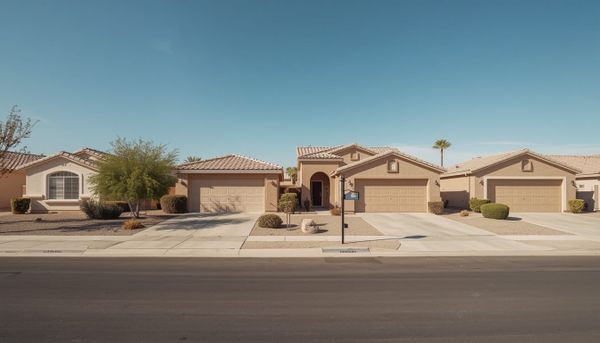
East Valley Real Estate 2025 to 2035: What Harvard Says Is Coming and How to Position for It


Every few months a new wave of content tells you a housing crash is coming. Some of it is clickbait. Some of it is based on real data interpreted badly. The Harvard Joint Center for Housing Studies, the Census Bureau, and Deloitte have now published long-range projections through 2035, and the picture they paint is not a crash. It is a shift. The East Valley is positioned directly in the path of that shift in a way that most of the country is not.
Understanding what that shift looks like, who drives it, and what it means for the financing decisions being made right now in Gilbert, Chandler, Mesa, Queen Creek, and San Tan Valley is the most useful conversation I can have with buyers, investors, and Realtors heading into the next decade.
Harvard's new projections say the country will add roughly 8.2 million households between 2025 and 2035. That averages out to about 820,000 per year. For context, the country was adding around 1.35 million households per year in the 2000s and closer to 1.2 million per year in the 2010s. Growth is slowing, and that is a fact worth sitting with.
But here is the part that changes the interpretation entirely. We are already short 3.5 to 5 million housing units nationally. We were short before growth started slowing. Slower growth does not fix a shortage that deep. It just means the shortage grows more slowly. And housing starts, both single family and multifamily, are running well below what would be needed to close that gap at current pace. Multifamily starts are down nearly 30% over the prior year.
|
820K
New households per year
through 2035 |
5.2M
New renter households
projected this decade |
5M
New Hispanic households
by 2035 nationally |
30%
Drop in multifamily
housing starts |
Arizona sits inside the Sun Belt, which is exactly where rental demand concentrates when affordability kills ownership. The combination of strong job growth, relatively lower cost of living compared to coastal metros, and continued inbound migration positions the East Valley differently from most of the national housing market.
The data on Hispanic household growth is particularly relevant here. Nationally, Hispanic households are projected to add nearly 5 million new households by 2035, the single largest demographic growth segment in the country. Arizona's existing Hispanic population base and continued population inflows mean that demand driver is not abstract for Mesa, Chandler, Gilbert, or Queen Creek. It is local and it is real.
Millennials and Gen Z buyers who are priced out of ownership do not disappear. They become long-term renters in markets where they want to live, work, and raise families. The East Valley has the employment base, the school districts, the infrastructure, and the lifestyle that makes it a destination market for exactly this demographic. The renter who cannot buy in Gilbert today may rent in Gilbert for the next decade. That is a landlord's position to own.
|
|
|
|
|
|
|
|
|
If you are a buyer in Gilbert, Chandler, Mesa, Queen Creek, or San Tan Valley who has been waiting for the perfect moment, the Harvard data reframes that calculation. The shortage is not resolving. Builders are not keeping up. The demographic groups driving rental and purchase demand in Arizona are growing. The East Valley is not a market where waiting for a crash is a rational strategy. It is a market where getting positioned is.
For first-time buyers, the practical message is that the affordability picture is slowly improving through income growth, and the down payment assistance programs available in Arizona are more powerful than most buyers realize. Waiting for rates to hit a specific number while prices hold and rents rise is not a free option. There is a real cost to staying out.
For move-up buyers in Chandler, Gilbert, and Mesa, the equity position many owners have built over the last five years is a genuine asset. Understanding what that equity can do, whether through a purchase, a strategic refinance, or a transition to a different property type, is a conversation worth having before the market shifts again.
The case for single family rentals in the East Valley is stronger in a renter-nation scenario than in any other housing environment. If 5.2 million new renter households are forming nationally and a disproportionate share of that growth concentrates in Sun Belt metros, East Valley landlords in Mesa, San Tan Valley, Apache Junction, and Queen Creek are positioned to benefit for the full decade.
The discipline point from the data is this: buy on return, not on what the neighborhood sold for last quarter. Investors who underwrote deals at late 2021 prices without enough margin are the ones struggling now. Investors who bought in 2022 and 2023 at rational prices with adequate reserves are cash flowing and sitting on equity. The formula has not changed. The market has just gotten more honest about what works.
One area worth watching closely in the East Valley is the senior housing picture. Baby Boomers aging in place will eventually transition, and when they do, the demand for senior-appropriate housing, whether downsized single family, rental, or reverse mortgage-enabled solutions, will be concentrated in exactly the communities where they already live. Mesa, Chandler, and Gilbert have significant Boomer populations. That transition creates both real estate and financing opportunities over the next ten years.
The Realtors and financial planners who serve East Valley clients well over the next decade are the ones who understand the demographic story behind the market. A client who cannot buy today is not a lost opportunity. That client is a renter for some period of time and a buyer when their financial picture improves. Staying in that conversation, providing value through market education and financial preparation, turns a 2026 renter into a 2028 buyer.
For financial planners, the real estate allocation question for clients who own East Valley property is increasingly a wealth management conversation, not just a housing conversation. Equity positions that have built over the last five years, combined with the long-term rental demand picture, make East Valley real estate a meaningful asset class in a diversified wealth strategy. Connecting those clients to the right mortgage and lending resources is where referral relationships pay off over a decade.
The data does not support a broad crash scenario in the East Valley. A 3.5 to 5 million unit national shortage, frozen inventory from rate lock, declining housing starts, and a demographic wave of renters heading into Sun Belt markets creates a floor that coastal overheated markets do not have. Specific overpriced properties in any market can correct. The East Valley market overall has structural support that most markets lack.
The Harvard data makes the waiting calculation harder to justify. Prices are not expected to fall meaningfully in the East Valley because supply cannot keep up with demand even as household growth slows. If you wait for a lower rate and prices hold or rise, you may be financing a more expensive home at a slightly better rate. The net position may not be better. A lender can model the specific comparison for your situation.
The demographic and supply data points toward yes. Sun Belt affordability relative to coastal markets, continued inbound migration, Hispanic household growth concentrated in Arizona, and a persistent housing shortage all create favorable conditions for East Valley rental investors. The discipline required is buying at the right price with the right reserves, not just buying because the market is strong.
Fewer transactions overall but not a dead market. The buyers who are active are serious and motivated. The listings that are priced correctly and presented well are moving. The volume compression means the quality of each client relationship and the depth of market knowledge matters more, not less. Realtors who understand the demographic shift and can speak to it intelligently have a significant advantage in the next decade.
It fits directly. Baby Boomers in Mesa, Chandler, and Gilbert who own their homes and want to stay in them have a tool that lets them access equity without a monthly payment. As the Boomer population ages and fixed income pressures increase, the Reverse Mortgage becomes one of the most relevant financial planning tools available. It is not a product of last resort. For the right situation it is a strategic decision that a financial planner and a VA-specialized lender should be discussing together.
|
|
|
|
East Valley Mortgage Strategist
Johnathan Cassels
CrossCountry Mortgage | Gilbert, AZ
Serving East Valley Buyers, Investors, Realtors, and Referral Partners Since 2002 Mesa • Chandler • Queen Creek • San Tan Valley • Eastmark • Apache Junction
|
CrossCountry Mortgage, LLC. Equal Housing Lender. NMLS #3029. This is not a commitment to lend. All loans subject to credit and property approval.