Congress Is Going After Wall Street Homebuyers. For East Valley Buyers, the Real Competition Is Not Who You Think

TEAM CASSELS | EAST VALLEY MORTGAGE
| POLICY REALITY CHECK | May 2026 | 5 min read |
The House passed the 21st Century ROAD to Housing Act this week 396-13, with broad bipartisan support and White House backing. The bill's most politically popular provision would ban institutional investors that own 350 or more single-family homes from buying additional properties. It is a genuine legislative achievement. For buyers in Mesa, Gilbert, Chandler, Queen Creek, San Tan Valley, Eastmark, and Apache Junction, the honest question is: will it actually change your competitive environment? The data answers that question more carefully than the headlines do.

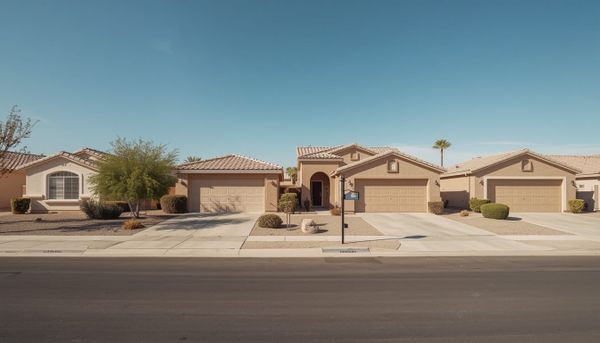
THESE ARE THE HOMES CONGRESS IS DEBATING. THEY ARE OWNED BY FAMILIES, NOT WALL STREET — AND THAT IS THE POINT.
| THE INSTITUTIONAL INVESTOR BAN — WHAT IS ACTUALLY IN THE BILL | |
|
✓ What It Does Prohibits institutional investors that already own 350 or more single-family homes from purchasing additional existing homes. They may still build new homes. The threshold is the House version — the Senate original proposed stricter rules including requiring build-to-rent developers to sell within 7 years, which the House removed. |
✗ What It Does Not Do Force existing investor-owned homes to be sold. Build new homes. Address the lock-in effect keeping millions of existing homeowners from listing their properties. Fix the 4+ million home national supply shortage. Change the financing environment. Apply to investors with fewer than 350 homes. Become law yet — the Senate must still approve the House's amended version. |
| Source: CNBC, CNN Business, Davis Polk analysis of the 21st Century ROAD to Housing Act, May 2026 | |
The Honest Numbers Behind the Investor Debate
The political case for restricting institutional investors is emotionally compelling and has earned support from President Trump, Sen. Elizabeth Warren, Sen. Tim Scott, and the majority of both chambers. Private equity firms began buying single-family homes at scale after the 2008 financial crisis and accelerated during the pandemic-era market. The image of Wall Street competing against first-time buyers for the same three-bedroom home in Gilbert or Queen Creek is real and it is infuriating.
What housing economists add to that picture is context. Large institutional investors — those owning 350 or more single-family homes, which is the bill's threshold — represent a small share of total home purchases nationally. The US housing market is currently short millions of homes. Experts including those cited in CNN's analysis note that the primary reason first-time buyers are not purchasing homes at the rate they used to is not because of large investors. It is because homeownership has become structurally unaffordable: elevated financing costs, insufficient supply, and a pricing environment that has outpaced wage growth for years.
WHAT ACTUALLY DRIVES EAST VALLEY INVENTORY CONSTRAINTS — BY RELATIVE IMPACT
| 1 |
The Lock-In Effect — Owners with Sub-4% Rates Who Will Not Sell Millions of East Valley homeowners are locked into mortgages with rates far below current levels. Listing means trading a low rate for a high one. Most will not. This is the dominant driver of resale inventory scarcity in Mesa, Gilbert, and Chandler. |
| 2 |
National Housing Shortage — 4+ Million Units Below Demand Decades of underbuilding have left the US market structurally short of housing. The East Valley has grown faster than most regions and has experienced this shortage acutely despite significant new construction activity in communities like Queen Creek and San Tan Valley. |
| 3 |
Elevated Financing Costs Reducing Buyer Purchasing Power The structural fiscal environment — elevated Treasury yields, the Moody's downgrade, congressional spending — keeps financing costs high. This compresses what buyers can afford and reduces the pool of qualified buyers competing in each price bracket. |
| 4 |
Permitting Delays and Construction Cost Inflation Builders face extended permitting timelines and elevated material costs that reduce the pace and affordability of new construction. The bill addresses permitting reform — this provision may ultimately have more impact than the investor ban. |
| 5 |
Institutional Investor (350+ Home) Purchases Large institutional investors (350+ homes) represent a small share of total home purchases nationally. Their impact in specific markets can be more concentrated, but the overall housing data consistently shows this as a contributing factor, not a primary driver. |
What This Debate Reveals About the East Valley Market
Sen. Bernie Moreno put it plainly in a hallway interview with CNBC after the House vote: "We don't want homes to be for rent, we want them to be the way that young people, especially, build generational wealth." That sentiment is right. The mechanism being used to pursue it is where the economics get complicated.
The bill's permitting reform and construction financing provisions are, in the view of many housing economists, the provisions most likely to produce durable improvement in housing supply and affordability. They are also the provisions getting the least attention in the coverage of the bill. The investor ban is the story because it gives a face to the villain. The supply side is harder to explain and slower to produce results.
For buyers in the East Valley, the relevant takeaway is this: the housing market is not difficult because Wall Street is buying homes in Queen Creek and Apache Junction. It is difficult because there are not enough homes, financing costs are structurally elevated, and the homeowners who might sell are financially disincentivized to do so. Those conditions are changing slowly — through legislation like this one, through market forces, and through the gradual moderation of the rate environment. None of them change fast enough to justify waiting. The buyers who are moving now, with preparation and the right mortgage partner, are getting ahead of the conditions that future buyers will be competing in when the legislation takes effect and when rates eventually moderate.
The real competition in the East Valley is not a hedge fund. It is the other prepared buyer who already has their pre-approval and knows exactly what they can afford.
Team Cassels | East Valley Mortgage Intelligence
FOR EAST VALLEY REAL ESTATE PROFESSIONALS
Your clients are going to ask whether this bill means they should finally buy. The honest answer is that the bill is not the reason — but the market conditions are.
Real estate agents, financial planners, and attorneys across Mesa, Gilbert, Chandler, Queen Creek, San Tan Valley, Eastmark, and Apache Junction: the investor ban will pass some version of this into law eventually. When it does, it will have a modest positive effect on inventory at the margin. What will not change is the value of acting now with preparation versus waiting for policy to solve a problem that policy alone cannot fix. Team Cassels gives your clients the full picture — not just the headline. Call us when you have a buyer who needs to understand the real market, not just the political news cycle.
FREQUENTLY ASKED QUESTIONS
5 Questions East Valley Buyers Are Asking About the Investor Ban
| 1 | If the investor ban passes, will it be easier to buy a home in Mesa or Gilbert? |
Marginally easier, over time, and primarily in markets where large institutional investors have been most active. The ban prevents investors with 350 or more homes from buying additional existing properties. It does not force them to sell what they already own. The inventory freed up by this provision will arrive gradually as investors who would have bought choose not to. For the East Valley, where institutional investors represent a portion of competition but not the dominant source of it, the practical impact on your specific search in Gilbert or Mesa is likely to be modest. The more significant provisions of the bill — permitting reform and construction financing — may ultimately do more for supply than the investor cap.
| 2 | Should I wait for the investor ban to take effect before buying in the East Valley? |
No. The bill still needs the Senate to approve the House's amended version. After enactment, the ban would not instantly release a wave of homes — investors would simply stop buying additional properties, not sell existing ones. The timeline from Senate approval to measurable inventory impact is measured in years, not months. Meanwhile, East Valley home values have continued their long-term appreciation trajectory, pending sales are up year-over-year, and buyers who wait for the policy to take effect are likely to be waiting in a market that has appreciated further while they waited.
| 3 | If large investors are not the main problem, what is actually keeping East Valley inventory so tight? |
The primary driver is the lock-in effect. Millions of East Valley homeowners hold mortgages at rates far below what is currently available. Selling means buying at current conditions. For most homeowners in Mesa, Gilbert, and Chandler, the financial math of moving does not work unless they have a compelling personal reason. This locks existing supply off the market far more effectively than institutional investor purchases. The second driver is the structural national housing shortage of 4 or more million homes, built up over decades of underbuilding relative to population growth and household formation.
| 4 | The House softened the Senate's version of the bill. Does that mean the investor ban is weaker than advertised? |
The House removed the Senate's requirement that build-to-rent developers sell homes within seven years. That provision, which Senate authors like Warren considered central to expanding individual homeownership, is gone in the current House version. Several senators have said publicly that the House changes gutted the most important element of the investor restriction. The bill still caps further purchases by large investors, but critics argue that without the forced-sale provision, investors who already own homes in the build-to-rent market continue to operate without restriction. Whether the Senate accepts the House version or forces further negotiation is still unresolved.
| 5 | What part of this bill should East Valley buyers actually be excited about? |
The permitting reform and construction financing provisions. These are the supply-side components of the bill that housing economists consistently identify as the more durable solutions to affordability. Permitting reform gives builders a clearer, faster path to bring new homes to market in communities like Queen Creek and San Tan Valley where demand is strong and land is available. Expanded construction financing reduces the barrier for smaller builders to compete, which increases the variety and volume of new supply. These provisions work more slowly and get less press. They are the parts of the bill most likely to produce material improvement in East Valley homebuyer options over the next five to ten years.
YOUR NEXT STEP
The Market Is Not Waiting for Washington. Neither Should You.
Team Cassels gives East Valley buyers, Veterans, First Responders, and the professionals who serve them the full picture — market data, policy context, and a precise pre-approval — since 2002.
GET YOUR FREE CONSULTATIONVisit teamcassels.com. No pressure. No obligation.