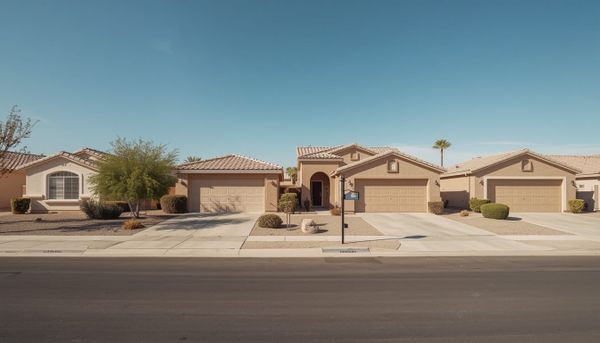
1,000 Americans Become Millionaires Every Day. Most of Them Own a Home

TEAM CASSELS | EAST VALLEY MORTGAGE
| WEALTH INTELLIGENCE | May 2026 | 5 min read |
According to the UBS Global Wealth Report, approximately 1,000 Americans crossed into millionaire status every single day in 2024. There are now 24 million millionaires in the United States, representing 41% of all millionaires globally despite the country accounting for just 4% of the world's population. Researchers who have studied these millionaires consistently find the same thing: 89% did not inherit their wealth. They built it. And the single most common asset in that wealth-building story is the home they live in.
The Wealth Gap Nobody Talks About
|
Federal Reserve data going back to 1989 shows that homeowners' median net worth has been 30 to 50 times higher than renters' median net worth, consistently, across decades of economic cycles, recessions, booms, and market crashes. Not 30 to 50 percent more. Thirty to fifty times more. A renter who believes they are making a financially neutral decision to keep flexibility is, on average, accepting a lifetime wealth outcome that is dramatically lower than the person next door who bought a house and paid a mortgage. That gap is not primarily explained by income differences. Researchers at Realtor.com found that homeownership correlates with higher rates of saving even beyond the home equity itself. Owning a home creates financial discipline. The monthly mortgage payment is forced savings. The equity builds on the full value of the property, not just the down payment you made to access it. |

Homeowners like this couple stand on the right side of a 30-50x wealth gap that has persisted for decades. |
| THE WEALTH GAP, HOMEOWNERS VS. RENTERS (FEDERAL RESERVE / REALTOR.COM DATA) | ||
|
Typical Homeowner Median Net Worth 96K+ Growing with every mortgage payment and every year of appreciation. Median home equity alone: approx. 00,000, representing roughly half of the typical homeowner's total net worth. |
vs. |
Typical Renter Median Net Worth ~0K The gap is not income-driven. Renters across all income brackets consistently accumulate a fraction of the net worth of homeowners over time. The difference is compounding equity. |
| Source: Federal Reserve Survey of Consumer Finances / Realtor.com analysis, 1989-2026. Homeowners' median net worth has been 30-50x that of renters consistently across this entire period. | ||
The Variable That Changes Everything: When You Buy
Realtor.com researchers ran the numbers on buying age and found a stark result: buying by age 32 is associated with approximately 22.5% higher net worth by age 50, or about 19,000 more, compared to buying in your 40s. Federal Reserve data confirms this pattern. Average household net worth does not climb above million until ages 55 to 64 on average. Households that buy later have less time to let home equity compound before reaching the years when wealth typically peaks.
Americans in their 50s now carry an average net worth above .3 million, according to Empower Personal Dashboard data from 2025. But that average is driven by homeowners who bought early and let time do the compounding work. Dave Ramsey's National Study of Millionaires, which surveyed 10,000 actual millionaires, found that most reached that milestone at an average age of 50.6. It took them 25 to 30 years. Which means most of them started in their early 20s to early 30s. With a mortgage.
| When You Buy Your First Home | Years of Equity Building by 50 | What the Research Shows |
| By age 28-32 | 18-22 years | Associated with approximately 22.5% higher net worth by age 50. This is the typical profile of most millionaires in Ramsey's 10,000-person study. Time compounds everything. |
| By age 35-40 | 10-15 years | Still builds meaningful wealth by 50 and beyond, particularly in markets with strong appreciation like the East Valley. Not ideal, but far better than continuing to rent through this period. |
| After age 40 | Under 10 years | Buys approximately 19,000 less in net worth by 50 compared to buying in the early 30s, per Realtor.com. The wealth-building potential is still real, but the compounding runway is significantly shorter. |
How the East Valley Accelerates This Timeline
Home prices nationally have nearly doubled since 2009, with the national median climbing above 27,000 by 2024. In the East Valley, the acceleration was steeper. A homeowner who purchased a Mesa, Gilbert, or Chandler home in 2017 or 2018 has seen appreciation that would have been described as a decade of gains compressed into five or six years. Many East Valley homeowners who bought before 2021 are carrying equity positions that would qualify them as millionaires on paper when combined with their retirement accounts and other assets, often a full decade ahead of the national average trajectory.
For Veterans using the VA loan, the compounding effect is even more pronounced. Zero down payment means zero initial cash barrier to starting the equity clock. No private mortgage insurance means more of every payment builds equity. East Valley Veterans who purchased with a VA loan five, eight, or ten years ago and have stayed put are, in many cases, already on track for the millionaire milestone at 50 simply by having made that one decision to buy rather than rent.
"Homeownership is certainly a path to the upper middle class, and the fact that it is so hard to achieve for first-time buyers right now is creating serious inequity."
Hannah Jones, Senior Economic Research Analyst, Realtor.com
FOR EAST VALLEY FINANCIAL PLANNERS AND ATTORNEYS
If your clients are renting at 35 or 40 and you have not had the homeownership conversation with them, you are leaving the most powerful wealth-building tool in America off the table.
Financial planners and estate attorneys across Mesa, Gilbert, Chandler, Queen Creek, San Tan Valley, Eastmark, and Apache Junction: the Federal Reserve data is unambiguous. Homeowners accumulate 30 to 50 times the net worth of renters over a lifetime. For clients who are currently renting, every year of delay is a measurable reduction in their projected wealth at 50, 60, and beyond. Team Cassels helps your clients understand not just the mortgage payment, but the wealth-building math behind the decision. We work alongside financial professionals to ensure the home purchase fits the full financial plan. That conversation starts with a call.
FREQUENTLY ASKED QUESTIONS
5 Questions East Valley Renters Are Asking About Building Wealth Through Homeownership
| 1 | I am 38 and still renting in Mesa. Is it too late to use homeownership to build serious wealth? |
No. But the urgency is real. Buying at 38 gives you roughly 12 years of compounding equity before you hit 50, versus the 18-22 years someone who bought at 28-32 accumulates. The Realtor.com data shows that buying in your 40s produces approximately 19,000 less net worth by 50 compared to buying in your early 30s. That gap does not disappear after 50, it compounds in the other direction too. Buying at 38 in the East Valley today means 12 years of market appreciation, principal paydown, and the financial discipline that homeownership creates. That is a meaningful head start compared to staying in a rental for another 5 or 10 years. The best time to have bought was 10 years ago. The second-best time is now.
| 2 | Why is owning a home so much more wealth-building than investing in stocks or other assets? |
Several reasons compound simultaneously. First, you gain equity on the full value of the property, not just your down payment. A 5% return on a 00,000 home is 5,000 in wealth gain. A 5% return on a 5,000 brokerage account is ,250. The leverage effect of a mortgage amplifies returns in a way no liquid investment can match. Second, the forced savings aspect is real: a monthly mortgage payment is non-negotiable, which means it actually happens, unlike discretionary investment contributions that get skipped. Third, you live in the asset while it appreciates, which means the carrying cost is not purely a wealth cost. And fourth, the gain on a primary residence receives preferential tax treatment that most investment returns do not.
| 3 | My rent is lower than what a mortgage payment would be in Gilbert right now. Am I not better off renting and investing the difference? |
This is the most common rationalization for continued renting, and the Federal Reserve data consistently shows it does not work in practice. The difference is almost never invested. It is spent. The mortgage payment forces the savings discipline that the rent-and-invest plan assumes but rarely delivers. Beyond that, rent is not static. East Valley rents have increased significantly over the past five years. The mortgage payment on a home bought today is locked. In five years, the renter's payment will be higher; the homeowner's principal and interest payment will be exactly the same. The locked payment is itself a form of long-term wealth protection. Team Cassels can model the rent-vs-buy scenario for your specific situation using current East Valley data.
| 4 | I am a Veteran. How does the VA loan change the wealth-building math? |
Significantly. The VA loan requires no down payment, which means you start building equity on the full value of the property from day one without having needed to save tens of thousands of dollars first. No private mortgage insurance means your monthly payment is entirely going toward principal, interest, taxes, and insurance, all of which are either wealth-building or necessary costs, none of which is wasted on mortgage insurance. And the VA loan's competitive terms mean your payment is lower than conventional financing at equivalent home prices, leaving more room for the retirement contributions and other investments that compound alongside your home equity. For East Valley Veterans who have served and now want to build the kind of wealth the research describes, the VA loan is the most powerful tool in existence. Team Cassels has been helping Veterans use it since 2002.
| 5 | If I buy now in Queen Creek or San Tan Valley, how do I know the appreciation will continue? |
Nobody knows what any specific market will do in the short term. What the data shows across long periods is that residential real estate in high-growth metro areas has consistently appreciated over 10, 20, and 30-year horizons. The Phoenix metro, and the East Valley specifically, benefits from structural demand drivers: population growth, a diversified employment base, a Sun Belt climate, strong infrastructure investment, and continuing migration from higher-cost markets. None of these factors have reversed. The wealth-building case for homeownership does not require extraordinary appreciation. It works on average returns over time. The compounding of even modest, consistent appreciation combined with principal paydown and the forced savings effect is what produces the 30-50x net worth gap between homeowners and renters that the Federal Reserve has documented for over three decades.
YOUR NEXT STEP
The Clock Starts When You Buy. Not When You Feel Ready.
Team Cassels helps East Valley buyers, Veterans, and First Responders start the wealth-building clock. One conversation. No pressure. Since 2002.
START BUILDING WEALTH TODAYVisit teamcassels.com. No pressure. No obligation.