What Is a USDA Loan, and Could It Get Me Into a Home With No Money Down?

Short answer: a USDA loan is a government-backed mortgage that lets eligible buyers purchase a home in qualifying rural and suburban areas with no down payment. Despite the name, it is not just for farms, and parts of the outer East Valley may qualify. Here is how it works and whether it fits you.
Here is the direct answer: a USDA loan is a government-backed mortgage, guaranteed by the U.S. Department of Agriculture, that helps eligible buyers purchase a home in qualifying rural and suburban areas with no down payment required. Despite the name, it is not just for farmers or remote land, plenty of small towns and suburban neighborhoods qualify, and for a buyer with steady income but limited savings, it can be one of the most powerful paths to ownership there is. The catch is that both you and the property have to meet the program’s rules. Here is how it works and how to find out if it fits you.
How does a USDA loan actually work?
You apply through an approved private lender, like any other mortgage, and the government’s guarantee behind the loan is what lets the lender offer no down payment. The lender reviews your income, credit, and debts as usual, and the property must sit in a USDA-eligible area. Qualified buyers can finance the full purchase price, and your monthly payment bundles principal, interest, property taxes, homeowners insurance, and applicable USDA fees together, much of it handled through escrow, which we explain in our guide on why a mortgage payment can change.
What are the types of USDA loans?
The most common type. Approved private lenders issue the loan and the USDA guarantees it. This is the program most East Valley buyers would use.
Issued directly by the government and aimed at lower-income households, with its own income and eligibility rules that differ from the guaranteed program.
A separate program that helps lower-income owners in eligible rural areas repair or modernize their homes, with its own requirements.
Who and what qualifies?
USDA eligibility rests on four pillars, covering both you and the home. All four need to line up.
The home must be in a USDA-eligible area. Many small towns and suburban neighborhoods qualify, not just remote land.
The program serves low-to-moderate-income households, with limits that vary by area and household size.
The home must be where you live. USDA loans are not for vacation homes or investment properties.
Borrowers must be U.S. citizens, non-citizen nationals, or qualified applicants under program rules.
On credit, there is no official minimum score set by the program, though lenders review your full picture, and a score around 640 or better can help you avoid extra review. Lenders also generally look for a manageable debt-to-income level. In short, the requirements are flexible, but they are real, and a lender can tell you quickly where you stand.
What does it cost if there is no down payment?
- No down payment, though you can put money down if you want to
- USDA guarantee fees, an upfront fee at closing and a smaller ongoing annual fee, in place of traditional mortgage insurance
- Closing costs, the usual lender, title, and transaction fees, some of which can sometimes be rolled into the loan
- Property taxes and homeowners insurance, paid through an escrow account as part of your monthly payment
Is a USDA loan right for me?
It is a fantastic tool for the right buyer and property, and a poor fit for others. Here is the honest balance.
- You are buying in an eligible rural or suburban area
- You have steady income but limited savings for a down payment
- The home will be your primary residence
- Your household income fits the program limits
- You want an accessible, low-cash path to owning
- You are buying in a mostly urban area that does not qualify
- Your income is well above the local limits
- You want a second home or an investment property
- You have a large down payment or strong credit and may do better elsewhere
- You need to close on a very tight timeline
Could a USDA loan work out here?
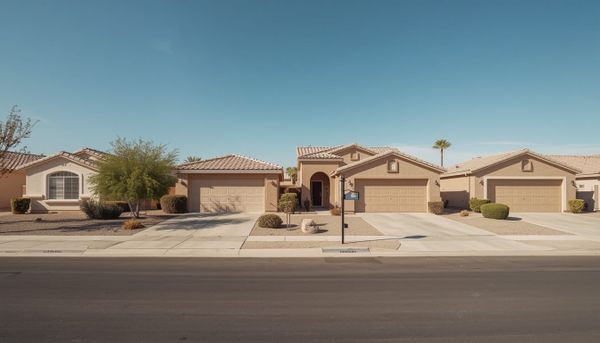
This is where it gets interesting locally. USDA-eligible areas often include the kind of growing, on-the-edge communities you find around the outer East Valley, so parts of areas like San Tan Valley, Queen Creek, and Apache Junction may fall within eligible zones, while more built-up areas typically do not. Eligibility is set address by address, so you cannot judge it by city name alone. The only way to know is to check the specific property, and that is exactly what I will do for you.
If you are a veteran, your VA benefit is usually the first thing we should compare against USDA, since both can offer no down payment. Which one wins depends on your eligibility, the property’s location, and your goals, and sometimes a veteran qualifies for both. Let us line them up side by side so you use the strongest option you have earned.
To keep the lanes clear: finding the right home and confirming the neighborhood are your real estate agent’s expertise. My job is the financing, checking whether a specific address is USDA-eligible, confirming your income and credit fit the program, and comparing USDA against your other options like FHA, conventional, and VA. See how they stack up in our guide on which home loan is right for a first-time buyer, then start with our East Valley mortgage team.
The bottom line
A USDA loan can put an eligible buyer into a primary home with no down payment in qualifying rural and suburban areas, and it is far more available than the name suggests. It comes with income limits, location rules, and guarantee fees, so it fits some buyers beautifully and others not at all. The smartest first step is simply to check whether your target area qualifies and whether you fit the program. Let our East Valley mortgage team check the address and your numbers, and compare USDA against every other path, so you buy with the strongest option available, right here across the East Valley.
What is a USDA loan?
It is a government-backed mortgage, guaranteed by the U.S. Department of Agriculture, that helps eligible low-to-moderate-income buyers purchase a primary home in qualifying rural and suburban areas with no down payment. Most are issued by approved private lenders.
Do USDA loans really require no down payment?
For eligible borrowers and properties, yes. Qualified buyers can finance the full purchase price, so no traditional down payment is required. You will still have closing costs and USDA guarantee fees, and you can choose to put money down if you want.
Are USDA loans only for rural farmland?
No, that is a common misconception. While the program targets rural areas, many small towns and suburban neighborhoods qualify, and borrowers do not need to farm or work in agriculture. Eligibility is based on the property's specific location, not its use.
Who qualifies for a USDA loan?
Eligibility rests on the property being in a USDA-eligible area, your household income fitting the program limits, the home being your primary residence, and meeting citizenship or eligible-status rules. Lenders also review credit and debts; there is no official minimum score, though around 640 or better helps.
Could a USDA loan work in the East Valley?
Possibly, in the outer, growing communities. Areas like parts of San Tan Valley, Queen Creek, and Apache Junction may fall in eligible zones, while more built-up areas usually do not. Eligibility is set address by address, so the specific property has to be checked.
Is a USDA loan better than an FHA or VA loan?
Not universally. USDA offers zero down in eligible areas with income limits, FHA has broad availability with flexible credit, and VA is often strongest for eligible veterans. The best choice depends on your location, income, credit, and goals, so it is worth comparing them side by side.


This article is for general educational purposes and is not financial advice or a commitment to lend. USDA loan program details, including no-down-payment financing, income limits, geographic eligibility, guarantee fees, credit and debt-to-income guidelines, and program types, are general, set by the U.S. Department of Agriculture and individual lenders, vary by area, household size, and property, and are subject to change; not all borrowers or properties will qualify, and getting pre-approved does not guarantee loan approval. Property eligibility is determined by address using official USDA resources. Statements attributed to a third-party expert reflect a published article and are paraphrased for context; that individual and their employer are not affiliated with and do not endorse CrossCountry Mortgage or the author. Comparisons to FHA, conventional, and VA loans are general and depend on individual circumstances. VA loan eligibility and benefits depend on individual circumstances. CrossCountry Mortgage is a private lender and is not acting on behalf of, or at the direction of, the U.S. Department of Agriculture or the U.S. Department of Veterans Affairs. Equal Housing Opportunity.