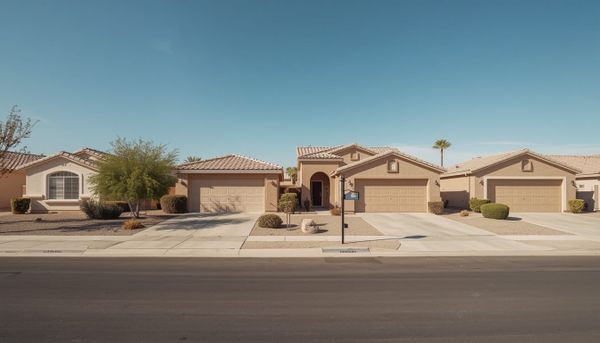
Fannie Mae Just Revised Its Housing Forecast. The Message for East Valley Buyers Is Stop Waiting


TEAM CASSELS | EAST VALLEY MORTGAGE
Fannie Mae released its May Housing Forecast this week, and it carries two specific updates that every buyer, seller, and real estate professional serving clients in Mesa, Gilbert, Chandler, Queen Creek, San Tan Valley, Eastmark, and Apache Junction needs to understand. The forecast for when financing conditions ease has been pushed further out. And the outlook for new construction has gotten meaningfully worse than the agency previously expected.
Together, those two revisions carry a message that is not subtle. The conditions buyers have been waiting to improve are not improving on the timeline most people hoped for. And the new housing supply that would help offset the existing inventory shortage is not materializing the way the previous forecast suggested it would. That combination has direct consequences for buyers in the East Valley who have been sitting on the sidelines waiting for a more favorable moment.
What Fannie Mae's May Forecast Actually Changed
Each month, Fannie Mae's Economic and Strategic Research Group releases a Housing Forecast that provides its best assessment of where the market is headed. These forecasts are not guarantees. But they are grounded in serious research and carry significant weight among lenders, builders, and real estate professionals nationwide.
The May forecast made two material changes from what the agency projected in April.
First, Fannie Mae revised its outlook for when financing costs will ease. The agency now expects elevated conditions to persist through a longer stretch than its prior forecast anticipated. The revision reflects the reality that mortgage markets have been hovering in a narrow range for weeks with little movement, and the geopolitical and inflationary factors keeping that range elevated show no clear sign of resolving quickly.
Second, Fannie Mae revised its expectations for new single-family home construction. While the agency's May forecast improved its 2026 construction outlook slightly compared to April, it significantly cut its expectations for 2027. The net result is that fewer new single-family homes are now expected to be built by the end of 2027 than the previous forecast suggested. For buyers counting on new construction to add meaningful inventory to the market, that is a consequential downward revision.
|
REVISION 01 Financing Costs Stay Elevated Longer Fannie Mae pushed back its timeline for when conditions ease. The window buyers have been waiting for is now expected later than the agency previously forecast. Waiting for relief on this front means waiting longer than most buyers planned. |
REVISION 02 New Construction Falls Short of Prior Projections The 2027 new construction outlook was cut significantly. Fewer single-family homes are now expected to be built by the end of next year than the April forecast projected. Less new supply means the inventory problem does not solve itself on the timeline buyers were hoping for. |
What the Construction Revision Means for East Valley Inventory
The East Valley has a meaningful new construction footprint, particularly in communities like Queen Creek, San Tan Valley, and Eastmark. These areas have attracted builders in part because of land availability and relative affordability compared to more established West Valley and inner East Valley markets. When Fannie Mae revises its national construction outlook downward, the effects ripple through growing communities like these.
Builders are already navigating elevated material costs, tighter margins, and a memory of what happened to those who overbuilt in the early 2000s. They are not flooding the market regardless of demand signals. Fannie Mae's revised outlook reflects this caution. New construction is not going to rescue the inventory situation in the East Valley on the timeline buyers have been counting on.
For buyers who have been leaning on the assumption that more new homes will eventually lower prices and expand their options in communities like Gilbert, Chandler, and Mesa, the Fannie Mae revision is a direct challenge to that assumption. The resale inventory that does exist in these markets is not going to be supplemented by a surge in new construction anytime soon.
The buyers who win in this environment are not the ones waiting for conditions to change. They are the ones who understand the conditions and build a plan around what is actually true.
The East Valley Communities Most Affected by This Forecast
The Fannie Mae forecast does not operate uniformly across all markets. The East Valley's different communities have different exposure to each of the two revisions. Here is how the picture breaks down by area.
|
Queen Creek and San Tan Valley These communities have the highest concentration of new construction in the East Valley. The downward revision to Fannie Mae's 2027 construction forecast means the pipeline of new homes buyers were counting on for expanded choice and price moderation is smaller than previously expected. Buyers who have been waiting for new inventory should factor this into their timeline. |
Eastmark Eastmark continues to attract buyers who value master-planned community design and east Mesa access to employment. With the revised forecast pointing to less new supply nationally, finished lots and available homes within Eastmark become more competitively priced. The window for acquisition at current conditions is worth evaluating now rather than later. |
|
Gilbert and Chandler These established communities have limited land for new construction. The Fannie Mae revision reinforces what is already structurally true in Gilbert and Chandler: the resale market is the primary supply source, and it is constrained by the lock-in effect. Buyers in these markets are competing for a defined and largely fixed pool of homes. |
Mesa and Apache Junction Mesa offers the most diverse price range of any East Valley community, from entry-level to luxury. Apache Junction remains one of the most accessible entry points for buyers whose purchasing power is stretched by the extended high-financing environment. Both markets reward buyers who act with preparation rather than waiting for a national forecast to shift in their favor. |
What Fannie Mae's Forecast Means for Buyers Who Have Been Waiting
Fannie Mae's revised May forecast is not a reason to panic. It is a reason to recalibrate. The agency's research is not predicting a catastrophe. It is predicting more of the same, extended further into the future than the previous forecast suggested.
For buyers who have been waiting for financing conditions to ease significantly before moving forward, this forecast provides a clearer picture of what that wait actually looks like in practice. The timeline is longer. The new construction relief is smaller. The market conditions that many buyers have been hoping would improve are now expected to improve more slowly and less dramatically than prior forecasts suggested.
What does not change is the cost of waiting itself. Every month spent outside of a home in the East Valley is a month of rent that builds no equity, a month of East Valley appreciation that benefits someone else, and a month of purchasing power that does not improve simply because a buyer chose to wait. The Fannie Mae forecast updates the timeline. It does not change the fundamental math of the wait.
FOR EAST VALLEY REAL ESTATE PROFESSIONALS
The Fannie Mae forecast gives you a credible, third-party source for the conversation your clients have been avoiding.
When clients ask whether conditions are going to improve soon, the honest answer is now grounded in Fannie Mae's own research: the easing is taking longer than expected, and new construction is not filling the gap as quickly as prior forecasts hoped. Real estate agents, financial planners, and attorneys across Mesa, Gilbert, Chandler, Queen Creek, San Tan Valley, Eastmark, and Apache Junction who want help framing this conversation can call Team Cassels. That is exactly the kind of mortgage intelligence we bring to every professional partnership.
Veterans and First Responders: What This Forecast Means for You
For Veterans and First Responders in the East Valley, the Fannie Mae forecast reinforces something that has been true throughout this market cycle: the advantages earned through your service are most valuable when conditions are challenging for everyone else. In a market where financing costs are elevated and staying that way for longer, the structural benefits available to Veterans and First Responders through specialized loan programs provide a meaningful edge over conventional buyers navigating the same environment.
If you have been holding back because you were expecting the broader market to improve before you moved forward, the Fannie Mae May forecast is a clear signal to revisit that assumption. The better moment you have been waiting for is arriving later than projected. The advantages you have right now are not going anywhere. That combination is worth a direct and specific conversation with a mortgage advisor who understands your programs thoroughly.
FREQUENTLY ASKED QUESTIONS
5 Questions East Valley Buyers Are Asking About Fannie Mae's May Forecast
What does Fannie Mae's May forecast revision mean for someone planning to buy in the East Valley this year?
It means the conditions that many buyers have been waiting for are expected to arrive later and at a less dramatic level than prior forecasts suggested. Fannie Mae revised both its financing cost outlook and its new construction expectations in ways that point to a longer period of the conditions buyers have been navigating. For buyers who are pre-approved and ready, this revision is a reason to take current conditions seriously rather than assume the next few months will bring significant relief.
I was counting on new construction in Queen Creek or San Tan Valley to eventually give me more options. Should I rethink that?
The Fannie Mae May forecast significantly reduced its expectations for new single-family construction in 2027 compared to what it projected in April. That reduction is a clear signal that the pipeline of new homes is not expanding the way prior forecasts suggested it would. Buyers who have been waiting for new construction to create more options and moderate prices in Queen Creek and San Tan Valley should factor this revision into their thinking. The supply relief is smaller and further out than it was expected to be just a month ago.
Will home prices in Mesa, Gilbert, or Chandler drop as a result of this forecast?
The Fannie Mae forecast does not project a price drop in established East Valley markets. The combination of an extended elevated financing environment and a downward revision to new construction expectations points to continued supply constraint, which is the primary force keeping prices elevated. Affordability pressure alone does not push prices down when supply stays tight, and the revised forecast does not change the supply picture in a direction that would favor buyers through price declines. The more likely outcome is prices that remain firm while buyers wait for conditions that may not arrive on the timeline they expected.
Should I lock in my financing now or wait to see if conditions improve later this year?
That question requires a specific answer based on your situation, not a general market opinion. What the Fannie Mae forecast does tell you is that the agency itself has pushed back its timeline for when conditions ease, and that its most recent data going into the forecast showed financing costs holding flat for weeks with no significant movement in either direction. If you have found the right home in the East Valley and you are pre-approved, the decision to wait for a better lock is a bet that the Fannie Mae forecast is wrong. That is a bet worth discussing with a mortgage advisor before you make it.
How do I use the Fannie Mae forecast to have a more productive conversation with a hesitant buyer?
Use it to replace vague optimism with specific information. Instead of telling a buyer that conditions will eventually improve, you can now show them that the agency whose forecasts shape the mortgage market has officially pushed back its timeline and cut its new construction projections. That is not a reason to panic. But it is a credible, third-party data point that transforms the conversation from opinion to evidence. When your buyer is weighing the cost of waiting against the cost of moving now, that evidence is the most useful tool in the room. Team Cassels can help you frame that conversation precisely.
YOUR NEXT STEP
The Forecast Changed. Your Plan Should Reflect It.
Whether you are a buyer reassessing your timeline, a homeowner evaluating whether to sell, or a real estate professional who wants the most current market intelligence to share with your clients, Team Cassels is ready. We have served East Valley buyers, Veterans, First Responders, and the professionals who serve them since 2002.
GET YOUR FREE CONSULTATIONVisit teamcassels.com to get started. No pressure. No obligation.