As a First Responder or Teacher, Am I Actually in a Better Spot to Buy a Home?

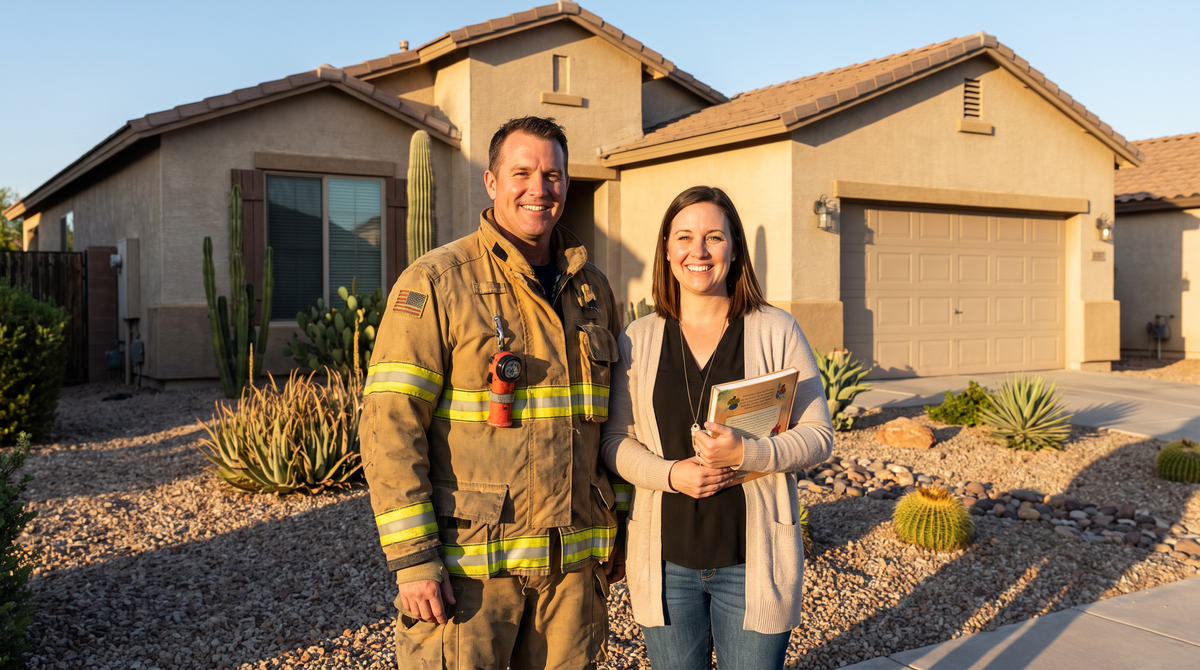
Short answer: yes, often much better than you would guess. A new national study found that households led by first responders, teachers, healthcare workers, and military members and veterans can afford the median-priced home in the large majority of major U.S. metros, while the typical household is priced out of nearly all of them. Here is why, and how to use that edge.
Here is the direct answer: yes. If you are a first responder, teacher, healthcare worker, or service member or veteran, you are very likely in a stronger position to buy a home than the average household, and a new national study puts real numbers behind it. Researchers found that these "hero households" can afford the median-priced home in as many as 39 of the country’s 50 largest metros, while the typical median-income household is priced out of all but one. That is a striking gap, and it is in your favor. Below is why it exists and how to turn it into a home.
Source: Homes for Heroes housing affordability analysis, 2026.
|
39 of 50
major metros where hero households can afford the median-priced home
|
1 of 50
where the typical median-income household can, by comparison
|
Who counts as a “hero household”?
Why are public-service households in a stronger spot?
It is not a fluke. A few real advantages come with these careers, and they are exactly what lenders like to see.
Public-service roles tend to offer dependable, durable employment. That stability is one of the things a lender weighs most heavily, and it can strengthen your position even when home prices are high.
In many parts of the country, and much of the interior in particular, hero-household incomes map well against local home prices. The result is a genuine, attainable path to ownership that the broader population does not have in the same way.
Beyond income, there are financing paths and, for some, benefits and assistance programs geared toward service professionals. Knowing which ones you qualify for can widen your options further.
What if I am younger or buying on one income?
Honesty matters here. The same study found that younger buyers and single-income households face a tougher road, and it would be a disservice to pretend otherwise. If you are early in your career or buying on one paycheck, the path can be narrower. But narrower is not closed, and it is exactly where the right preparation and the right programs make the biggest difference. This is a reason to get expert eyes on your numbers, not a reason to count yourself out.
How do I turn this advantage into a home?
An edge only helps if you use it. Here is how to put your position to work.
Your stable income is an asset, but you need to see exactly what it means for your buying power. A real pre-approval turns your career stability into a concrete price range you can shop with confidence.
You do not necessarily need a large down payment. The study itself assumed a modest down payment, and there are low-down and even zero-down options for those who qualify. Ask what fits your situation before you assume you need to save for years.
Depending on your role and location, there may be assistance or specialized programs available to you. It is worth a direct conversation to surface every option you have earned access to.
Attainability varies a lot by market. The right agent can point you toward the neighborhoods where your strong, stable income stretches the furthest, so you buy where you are genuinely well positioned.
If you are a service member or veteran, you sit in perhaps the strongest position of all, because your VA benefit can get you into a home with no down payment and no monthly mortgage insurance. Pair that with the steady income these careers provide, and you have a combination most buyers would envy. If you have not put your benefit to work yet, that is money on the table worth claiming.
To keep the lanes clear: which neighborhoods fit you and what a home is worth are your real estate agent’s expertise. My job is the financing, translating your stable income into real buying power, matching you to the low-down-payment and profession-specific programs you qualify for, and getting you approved so your advantage becomes an actual home. Start that with our East Valley mortgage team.
The bottom line
If you serve your community as a first responder, teacher, healthcare worker, or in uniform, the data says you are better positioned to own a home than most, largely because of the stable career you have built. That advantage is real, but it only pays off if you act on it. Get pre-approved, ask about the low-down-payment and profession-specific programs you qualify for, and shop where your income goes furthest. Map the financing with our East Valley mortgage team, and put the edge you have earned to work, right here across the East Valley.
Are first responders and teachers really in a better position to buy a home?
According to a 2026 Homes for Heroes analysis, yes. Households led by first responders, teachers, healthcare workers, and military members or veterans could afford the median-priced home in as many as 39 of the 50 largest U.S. metros, while the typical household could in only one. The main driver is stable careers and steady income.
Do I need a big down payment as a first responder or teacher?
Not necessarily. The affordability study assumed a modest down payment, and there are low-down-payment and even zero-down options for those who qualify. The right path depends on your situation, so it is worth reviewing with a lender before assuming you must save for years.
Are there special home loan programs for public-service workers?
There can be, depending on your profession and location, from specialized financing to assistance programs. Service members and veterans also have the VA loan. A lender can help identify which programs you personally qualify for.
What if I am buying on a single income or early in my career?
The same study found younger and single-income buyers face a tougher road, but narrower does not mean closed. Preparation and the right programs matter most in these cases, so getting pre-approved and reviewing your options with a lender is the best first step.
How do I start using this advantage to buy a home?
Get pre-approved to turn your stable income into a concrete price range, ask specifically about low-down-payment and profession-specific programs, and work with an agent to shop where your income goes furthest. Pre-approval does not guarantee approval, but it shows you where you truly stand.


This article is for general educational purposes and is not a commitment to lend or financial advice. Affordability findings and statements attributed to Homes for Heroes and Amit Kulkarni reflect a published third-party analysis and are paraphrased for illustration; that organization and individual are not affiliated with and do not endorse CrossCountry Mortgage or the author. Affordability varies by metro, income, profession, and property, and study assumptions may differ from your situation. Program and down-payment eligibility depends on individual circumstances and program guidelines, which are subject to change; not all borrowers will qualify, and getting pre-approved does not guarantee loan approval. Any profession-specific or down-payment-assistance programs referenced are offered by third parties, not CrossCountry Mortgage, and have their own eligibility rules. VA loan eligibility and benefits depend on individual circumstances. CrossCountry Mortgage is a private lender and is not acting on behalf of, or at the direction of, the U.S. Department of Veterans Affairs. Equal Housing Opportunity.